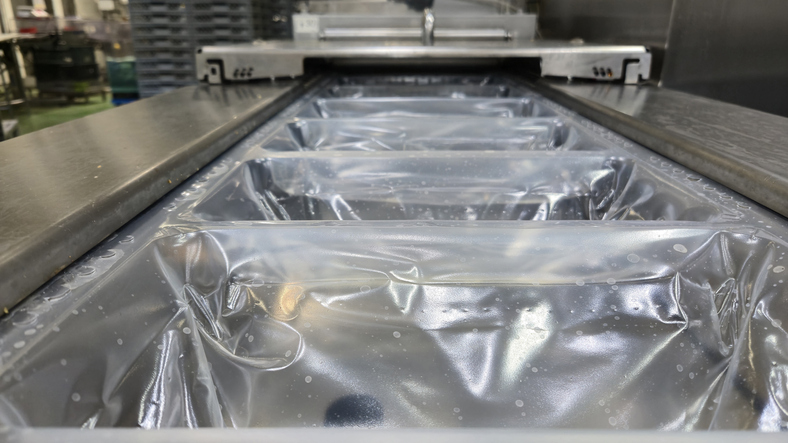
Large part thermoforming projects can vary in size, scale, and product applications. Engineering and design considerations for these projects should specify part manufacturing in order to streamline production and ensure smooth operations from conception to completion.
Allied Plastics, a custom thermoforming manufacturer, offers a large part thermoforming engineering guide with some of the best practices we’ve discovered over the years, including considerations on sizes, scale, and other project specifications.Detail Size Ranges
Defining the overall size of your project should be the first step in engineering practices for large part thermoforming services. When the overall size is set, it allows for other design considerations, such as draw depth ratio, sheet size, and clamping limits, to be planned out. As an example, Allied Plastics can handle sizes up to 9 ft by 14 ft by 60 inches in depth of draw.
It’s important to note that the bigger the project is, the more difficulties can occur with the draw depth.Define Sheet and Clamp Limits
Sheet size can easily be overlooked, but it’s important to focus on the size, as the sheet has to cover the part while also allowing for room for clamping. Define ratios by oversizing for sheet size based on the finished part design, allowing room for clamping to be performed.The Relationship Between Draw Depth and Geometry
Understanding the relationship between draw depth, including the draw ratio, and part geometry is an essential aspect of engineering and design principles for large part thermoforming. Typically, in large part projects, the draw ratio is the controlling design principle as depth drives forming difficulty and thinning. Many best practices allow for large parts with shallow depths.Tolerances on Large Part Thermoforming
It’s critical to note that large part thermoforming projects are going to contain looser tolerances compared to other manufacturing methods, such as injection molding or machined parts. Because of this, it’s essential to iron out tolerances with the help of your chosen manufacturing company’s engineering team ahead of production.
Make considerations on both formed tolerances and trimmed tolerances.Material Selection
Large part thermoforming typically means using heavy-gauge sheets with product applications stemming from enclosures to panels. Thicker sheets are best for this type of thermoforming, and that has a direct impact on material selection. Thicker sheets are best to help preserve stiffness and reduce deformation during production. These materials are best for this style of thermoforming to reduce defects and costly rework.
- ABS: ABS provides excellent rigid characteristics along with a high impact resistance and proven dimensional stability.
- HDPE: HDPE features proven durability in tough environments as well as chemical and environmental resistant properties. Additionally, it’s a cost-effective material that provides high strength-to-weight ratios.
- PETG: One of the more favorable materials to use for large part thermoforming, PETG allows for deep draws and features high impact strength. It also provides an aesthetically pleasing natural finish, eliminating the need for any secondary operations.
- PVC: Like many of the other materials listed, PVC features noteworthy durability and structural strength. PVC, like HDPE, is a cost-effective material option.
- PP: Less raw material is needed to make large part thermoforming projects when using PP because of its naturally low density, also making it a cost-effective solution.
Specifications to Consider
- Maximum size parameters, including draw depth and minimum angle draft
- Sheet thickness and resin grade
- Required blank size or clamp margin
- Critical formed tolerances compared to trimmed tolerances
- Surface finish requirements, if applicable
Contact Allied Plastics for Your Large Part Thermoforming Project Today
Since 1995, Allied Plastics has specialized in creating custom thermoforming solutions OEMs rely on. In our Twin Lakes, Wisconsin, facility, our highly skilled team draws from decades of experience to work through the projects our customers need.
Quality assurances on large part thermoforming projects are noted in our ISO 9001 and ISO 14001 certifications. These demonstrate our quality management systems and environmental quality management procedures. With numerous materials readily available, our thermoforming capabilities can handle sizes all the way up to 9 ft by 14 ft by 60 inches in depth of draw.
Contact our team today to get started on your large part thermoforming project and discover the Allied Plastics difference.