Every manufacturing operation is suspect of having defects occur before, during, and after production, and thermoforming is no different. Thermoforming defects can occur for multiple reasons, and the defects can range from merely cosmetic issues to complete structural deformities.
Understanding why parts fail and knowing common production issues is important for designers and engineers, however. It presents the opportunity to learn more not only about thermoforming operations, but how to design and engineer around potential pitfalls in the manufacturing process.
Allied Plastics lists out why parts fail, common production issues and ultimately, how to prevent thermoforming defects.
Common Thermoforming Defects
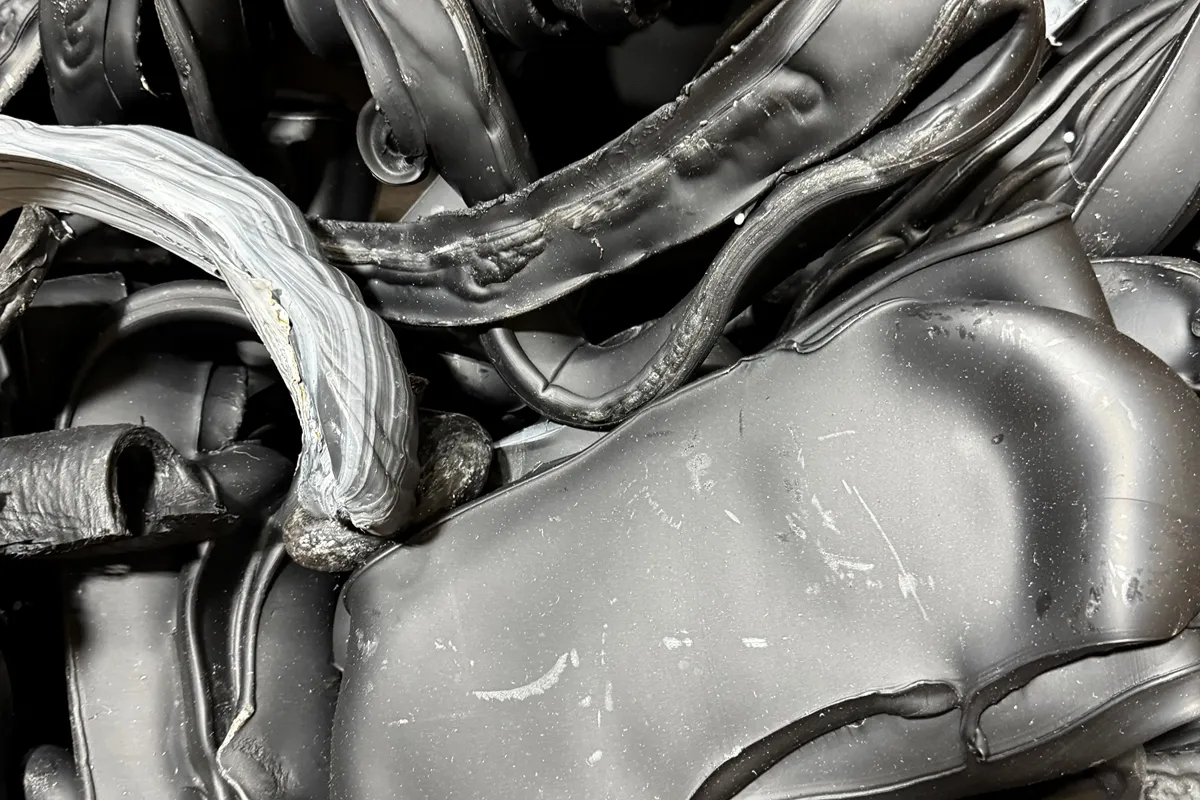
Thermoforming defects are bound to happen, and when they do, it’s important to know what they are, what they mean, and what they look like. Below are some of the most common defects seen from thermoforming.
- Webbing and bridging
- Excessive thinning
- Thick spots and poor material distribution
- Incomplete detail
- Soft corners
- Burning, scorching, discoloration
- Wrinkling
- Sagging
- Warping
- Distortion
- Surface marks and texture variation
- Sticking
- Difficult release
- Trim cracking
- Edge splitting
Explaining the Why
On its face, thermoforming operations are truly a material distribution process as flat sheets of melted plastic form to become the designed shape they are supposed to. Because of this, every deep wall, tight corner, and local feature are in competition for the stretched material.
If sheets are too hot, it can sag, web, and lose control during the forming process. If it’s not hot enough, it can’t correctly and accurately form to detail. There are numerous variables to keep in mind in order to best prevent too hot or too cold temperatures in forming. First, start with the sheet condition and inspect for variation, contamination, orientation, and any moisture prior to forming. If sheet thickness isn’t consistent, that’s enough for ununiform heating.
Secondly, the thermal profile. Use true sheet surface and through thickness temperature measurements to get proper qualitative information. Tooling geometry also plays a part here with draw ratio and radii as an example determining the material flow path. Forming dynamics also play a role here as vacuum level – while important – isn’t as important as repeatable evacuation with a leak-free seal.
Lastly, parts can still warp during cooling and downstream handling, so ensure best practices are known and understood by all technicians involved in the final steps.
Prevention
One of the easiest and most manageable ways to limit thermoforming defects from the very beginning is by establishing a material specific process window. This can be achieved by recording resin grade, sheet supplier, nominal and measured gauge, sheet orientation, dryer settings, forming time, vacuum and pressure profile, cooling time, and trim conditions. These aspects place a consistency on material selection and every aspect of the manufacturing process and when a process window has been established, it allows for more streamlined manufacturing.
While control of the material selection process is a critical way to prevent and limit defects in thermoforming operations, it’s not the only way. Design aspects are equally as important to control in order to limit defects, starting with controlling and documenting wall thickness throughout the component. Creating a thickness map and defining minimum thickness at functional locations is a strong way to limit defects.
There are design and material selection considerations to make while limiting thermoforming defects, but there are also process-oriented actions that can be taken to limit part defects. A strong starting point could be validating cooling times prior to changing any part of the actual manufacturing process. Cooling imbalances can cause defects and when those actions are validated, it rules out a potential source ahead of time.
Eliminate Thermoforming Defects and Partner with Allied Plastics Today
Allied Plastics has designed, engineered, and manufactured custom heavy-gauge thermoformed solutions for OEMs, supplier programs, and other customer sources for over 30 years. In our Twin Lakes, Wisconsin, facility, our team of technicians and engineers work together to create the parts and products our customers need.
Part of Allied Plastics’ commitment to teamwork includes our dedication to quality control and management in every manufacturing program we’re operating. Our quality professionals are well-versed in Production Part Approval Process (PPAP), Initial Sample Inspection Report (ISIR), and Part Submission Warrants (PSW).
We perform thorough inspections of all the products we manufacture and perform extensive testing to ensure proper dimensions, visual aspects, and parts are defect-free.
Contact Allied Plastics today to learn more about how we handle thermoforming defects and what it takes to launch a successful thermoforming program.