When considering vacuum forming services, choosing between single sheet versus twin sheet is one of the first decisions your team will have to make. While both services perform the essential functions of vacuum forming, they vary in product application and benefits of manufacturing services.
Allied Plastics breaks down when to use double wall construction, twin sheet vacuum forming, and how this service ultimately leads to durable, high-quality plastic formed parts.
What Twin Sheet Vacuum Forming Is
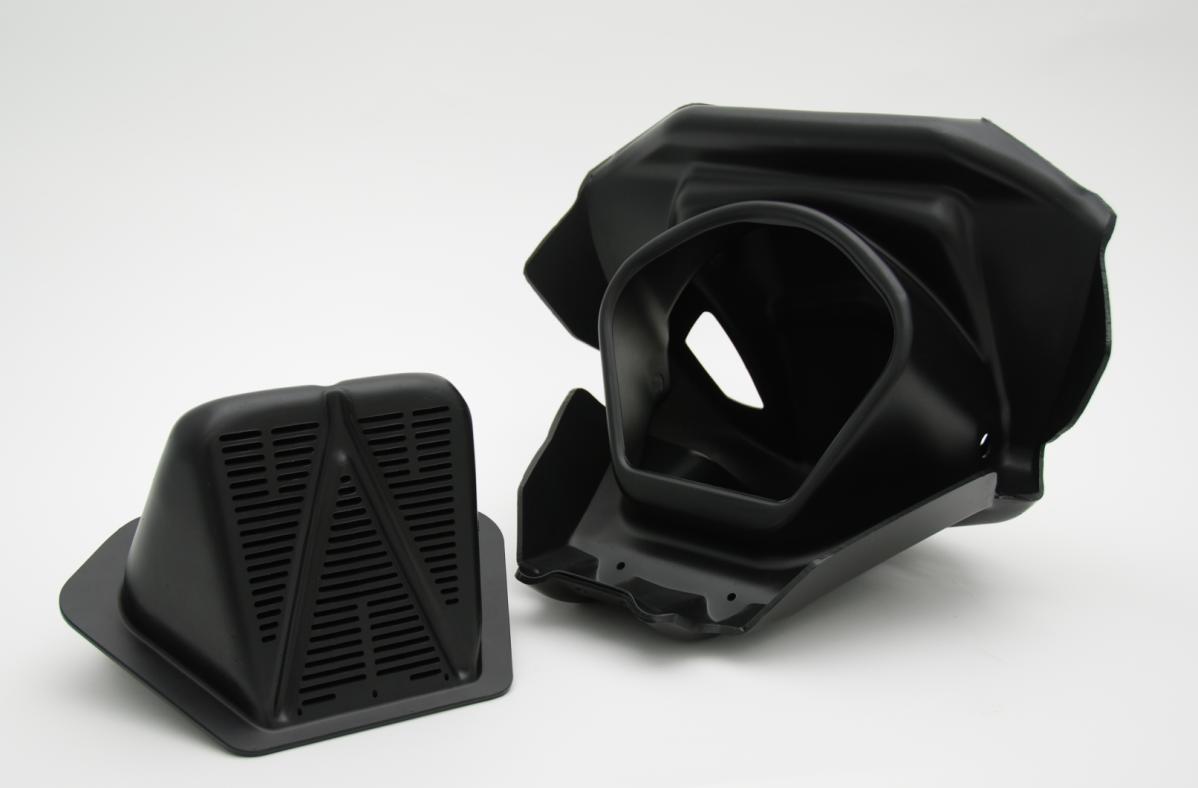
The primary distinction between twin sheet vacuum forming and single sheet vacuum forming lies in the construction process. In twin sheet forming, two separate sheets are heated and formed simultaneously, then fused together to create a double-walled structure, whereas single sheet forming utilizes one sheet shaped to the desired geometry.
Multiple materials can be used such as HDPE, HMWPE, TPO, PETG, and ABS. Every material has different applications and benefits, but the unifying property of every material is that it easily forms to the shape necessary, provides high impact strength and durability, superior weldability and sealability, dimensional stability, and chemical and weather resistance.
Best Applications for Twin Sheet Vacuum Forming
Double wall construction utilizing twin sheet vacuum forming occurs when parts need higher stiffness, better insulation, or a built-in structural cavity. While double wall construction and twin sheet forming services face increased tooling costs and project complexities, they payout in performance gains in part application.
- Double wall construction best serves parts that require higher rigidity without the addition of a lot of weight such as fluid tanks.
- If a vacuum formed part needs better levels of acoustic and thermal insulation, consider using twin sheet services. Parts where this is applicable include insulated panels for construction and industrial applications, protective casings, and custom cases.
- When ducts, enclosures, tanks, covers, and structural panels require hollowed walls, double wall construction naturally becomes the choice for vacuum formed projects.
- For more naturally stronger edges and bonded seams, consider twin sheet vacuum forming as the primary manufacturing service as opposed to value added operations such as welding. When vacuum forming is the primary manufacturing method, these steps occur as a byproduct of the production process.
Partner With Allied Plastics For Your Twin Sheet Vacuum Forming Projects
Allied Plastics is a globally recognized leader in thermoforming and manufacturing. Specializing in large-part production for OEMs and a range of industries, the company combines advanced capabilities with a highly skilled team to deliver reliable, high-quality components tailored to your specifications.
We offer numerous materials for use in vacuum forming projects, including HDPE, HMWPE, and PETG to name just a few. With long-standing ISO 9001 and ISO 14001 certifications, our customers know that quality management extends beyond how we operate, but how we treat our customers as well.
Time for a twin sheet vacuum forming project? Contact Allied Plastics today.